


A bear dream is hard to brush off.
Even if nothing dramatic happens, the bear usually leaves something behind. Fear. Awe. Pressure. Protection. A strange sense that something powerful entered the dream and waited for you to notice it.
Animal dreams often feel different because they do not explain themselves in ordinary language. A bear does not sit across from you and say, “You need stronger boundaries.” It charges, watches, sleeps, growls, protects, follows, or stands in silence. That is why bear dreams are worth slowing down for. They are rarely random in the emotional sense, even when they are not literal predictions.
The Quick Takeaway: A bear dream often points to power, instinct, protection, fear, anger, solitude, motherhood, boundaries, or a deep need for rest. The real meaning depends on what the bear was doing, how you felt during the dream, and what in your waking life currently feels too strong, too close, or too important to ignore.

Book About Dreams
The Magic of the Night
This book is perfect for anyone seeking to understand the messages and meanings hidden in their dream life. It offers a clear framework for interpreting dreams with real examples and thoughtful insights.
Get the Book- Based on personal dream journals
- Step-by-step interpretations
- Perfect for dream seekers
What Does a Bear Dream Mean?
A bear dream is a dream where a bear becomes the main emotional symbol. It may appear as a wild animal, a threat, a protector, a mother with cubs, a sleeping creature, a pet, or even a talking guide.
The bear matters because it carries two opposite feelings at once.
A bear can feel dangerous.
A bear can also feel protective.
That tension is the point.
In waking life, bears are powerful animals that people both respect and fear. In dreams, that same double meaning often shows up as a question: Is this power against me, around me, or inside me?
Some dream interpreters connect bears with an “overbearing” person or situation. Dream analyst Lauri Loewenberg told Mindbodygreen that bears often relate to someone or something that feels overbearing, and that the dreamer’s emotional response is key to understanding the message.
That is useful, but I would not stop there.
A bear may also represent your own strength, your own anger, your need for quiet, your protective instincts, or a part of you that has been pushed down too long. The dreamer’s own associations matter. One person sees a bear and thinks of danger. Another thinks of motherhood. Another thinks of wilderness, solitude, or survival.
That is why dream dictionaries can help, but they should not have the final word. The best interpretation usually begins with this question: What did the bear make me feel?
For more on that idea, this related guide on whether remembering your dreams means it is a message may help you think through the difference between a random dream image and one that keeps pressing on your attention.
Why Bears Show Up When Something Feels Too Big
Most people search for “bear dream meaning” after a vivid dream, not after a cute little scene they forgot by breakfast.
That tells us something.
A bear often appears when the emotional scale of something is large. Maybe you are dealing with conflict. Maybe someone in your life feels controlling. Maybe you are trying to protect a child, a relationship, a creative project, or even your own peace. Maybe you are tired of being gentle in a situation that requires firmness.
Dream research gives some support to the idea that dreams often reflect waking concerns. The continuity hypothesis of dreaming suggests that waking experiences, thoughts, and emotions can carry into dream life. Researcher Michael Schredl has written about how waking activities and concerns are reflected in dreams.
So if a bear appears, do not ask only, “What does a bear symbolize?”
Ask, “Where in my life does something feel bear-sized?”
That could be:
A person with a strong personality
A responsibility you cannot ignore
A fear you keep avoiding
A protective role you have taken on
A buried anger that wants acknowledgment
A need for retreat, silence, and recovery
The bear may not be the problem. It may be the size of the problem.
If the Bear Is Chasing You

A bear chasing you in a dream usually points to avoidance.
This does not mean you are weak. It means something in your life may feel too intense to face directly right now. It could be a conversation, a decision, a deadline, a memory, a person, or an emotion you would rather outrun.
Chase dreams are common because they dramatize avoidance so clearly. You do not need a degree in symbolism to understand the feeling: something is behind you, and you do not want it to catch up.
A 2024 study on dreams of being chased connected such dreams with waking-life experiences and negative relationships, using the continuity hypothesis as part of its framework. That does not mean every bear chase dream is about a relationship, but it supports the broader idea that dream threats often echo waking emotional pressure.
Here is the practical question:
What am I avoiding that has only become stronger with time?
If the bear catches you, notice what happens next. Does it attack? Stop? Look at you? Transform? Speak? Sometimes, the moment after being caught is the real message. You may discover the thing you feared was not as destructive as you thought. Or you may see how serious the issue has become.
A bear chase dream does not always mean, “Danger is coming.”
Sometimes it says, “You cannot keep running from this.”
If the Bear Attacks You
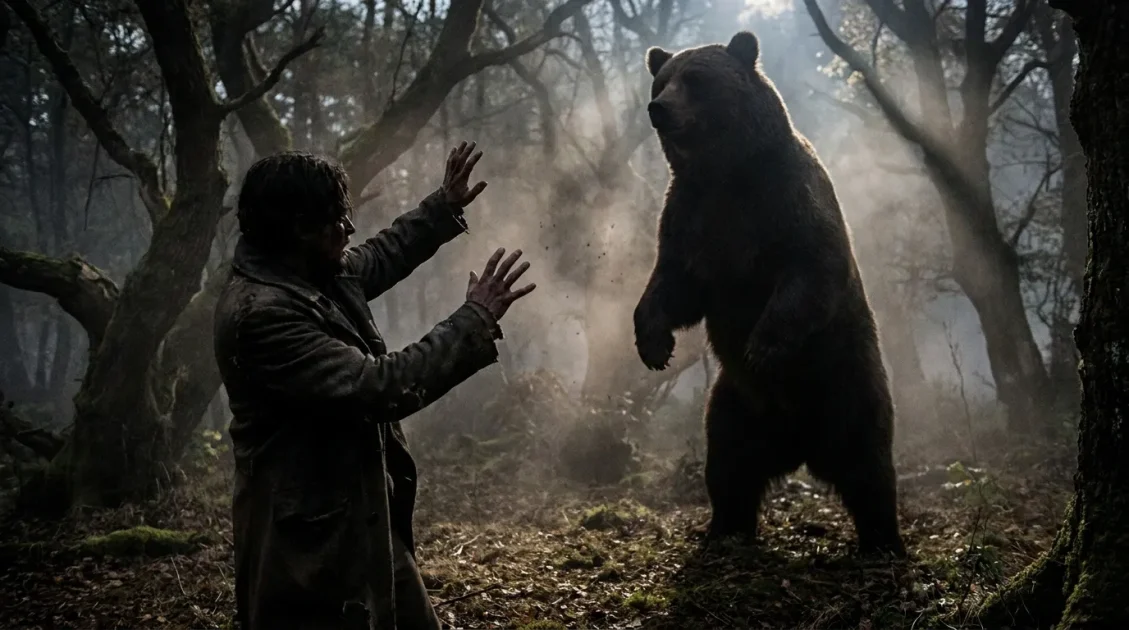
A bear attack dream can leave you shaken long after waking. This is where it helps to be careful and grounded.
An attacking bear does not automatically mean physical danger. More often, it reflects emotional threat, conflict, pressure, anger, or a situation where you feel cornered.
The threat simulation theory of dreaming suggests that dreams may simulate threatening events, giving the mind a kind of rehearsal space for danger. Studies by Valli and Revonsuo discuss dreams as possible simulations of threat, though dream science is still debated, and no single theory explains every dream.
That theory fits bear attack dreams in a simple way: your mind may be staging a confrontation with something that feels threatening.
Ask yourself:
Who or what feels aggressive right now?
Where do I feel cornered?
Am I afraid of someone else’s anger, or my own?
What boundary has been crossed?
Where have I waited too long to defend myself?
If you fight back in the dream, the meaning may shift. Fighting the bear can suggest you are ready to face pressure more directly. If you freeze, the dream may be showing how overwhelmed you feel. If you escape, it may point to survival, but also to unfinished business.
The point is not to label the dream “good” or “bad.” The point is to understand your position in the dream.
Were you helpless?
Were you alert?
Were you finally angry enough to move?
That difference matters.
If the Bear Is Calm or Friendly

A calm bear is one of the most interesting bear dreams because it changes the emotional tone completely.
A friendly bear may represent strength that is no longer threatening. It may symbolize protection, confidence, steadiness, or a powerful part of yourself that you are learning to accept.
This is where many quick dream meanings fall short. They treat the bear as a danger symbol every time. But a calm bear can feel like a guardian. It may be the part of you that knows how to stand firm without attacking. It may be a person you once feared but now understand better. It may even represent a season where you are becoming less afraid of your own authority.
Mindbodygreen’s article also notes that friendly bear dreams can represent someone you once saw as a threat but later understood as harmless, or a softer, protective side of yourself.
My own view is this: a calm bear dream often asks you to respect strength without panicking around it.
Not every powerful thing is dangerous.
Some power protects.
Some power stabilizes.
Some power belongs to you.
If You Dream About a Mother Bear or Bear Cubs
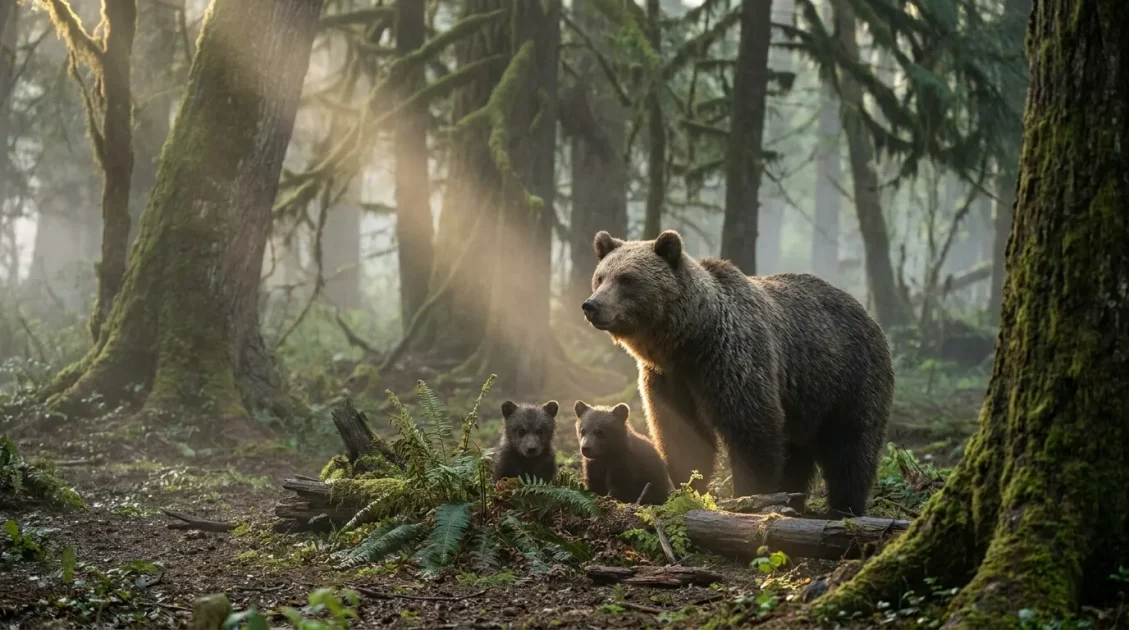
A mother bear’s dream usually brings up protection.
This could connect to actual parenting, but it does not have to. You may be protecting a younger sibling, a vulnerable friend, a fragile relationship, a new idea, a business, a healing process, or your own inner child.
Bear cubs often make the dream feel more tender, but also more tense. A cub is vulnerable. A mother bear is dangerous when that vulnerability is threatened.
So ask:
What am I protecting right now?
Am I being protective in a healthy way, or am I becoming reactive?
Is someone else acting like a “mama bear” around me?
Do I feel watched, guarded, or controlled?
There is a difference between protection and possession. Bear cub dreams can help you see which one is active.
If the dream feels warm, it may reflect care, loyalty, and responsibility. If it feels frightening, it may point to smothering control, family pressure, or fear of upsetting someone who holds emotional power.
If the Bear Is in Your House

A bear inside your house is a strong image.
In dreams, houses often represent the self, private life, family life, emotional safety, or the mind’s inner rooms. So a bear in the house may suggest that something powerful has entered your personal space.
That could mean:
A family conflict is becoming hard to ignore
Your private peace feels invaded
A strong emotion has moved from the outside world into your inner life
You need stronger boundaries at home
Your own hidden strength is becoming more visible
BetterSleep’s dream article connects bears in the house with family, shelter, stability, and close relationships. That makes sense, though I would add one caution: the feeling of the dream should guide the interpretation.
A bear sleeping peacefully in your living room is different from a bear breaking through the door.
One may suggest inner strength resting inside you.
The other may suggest intrusion.
The setting matters. Was the bear in your bedroom? Kitchen? Childhood home? Basement? Each place adds detail. A basement bear may point to buried emotion. A bedroom bear may point to vulnerability, intimacy, or rest. A kitchen bear may point to nourishment, family rhythms, or daily survival.
The dream gives clues. Do not rush past them.
If the Bear Is Sleeping or Hibernating

A sleeping bear can mean rest, recovery, patience, or dormant power.
This is one of the more practical bear dream meanings. Bears hibernate, and that natural pattern gives the dream a clear emotional language. Something may be resting before it returns. You may need quiet. You may be in a season where outward progress looks slow, but inner restoration is happening.
BetterSleep links hibernating bear dreams with being dormant, hiding away, avoiding tasks, or needing to re-emerge. Mindbodygreen also connects hibernating bears with rest, recovery, and a simmering issue or person that should not be provoked.
Both can be true.
A sleeping bear may ask:
Do I need rest, or am I hiding?
Is this a peaceful pause, or a delayed confrontation?
What part of my strength has gone quiet?
Am I afraid to wake something up?
This is where interpretation gets honest. Rest and avoidance can look similar from the outside. The dream may help you feel the difference.
True rest leaves you clearer.
Avoidance leaves you more tense.
If You Kill the Bear
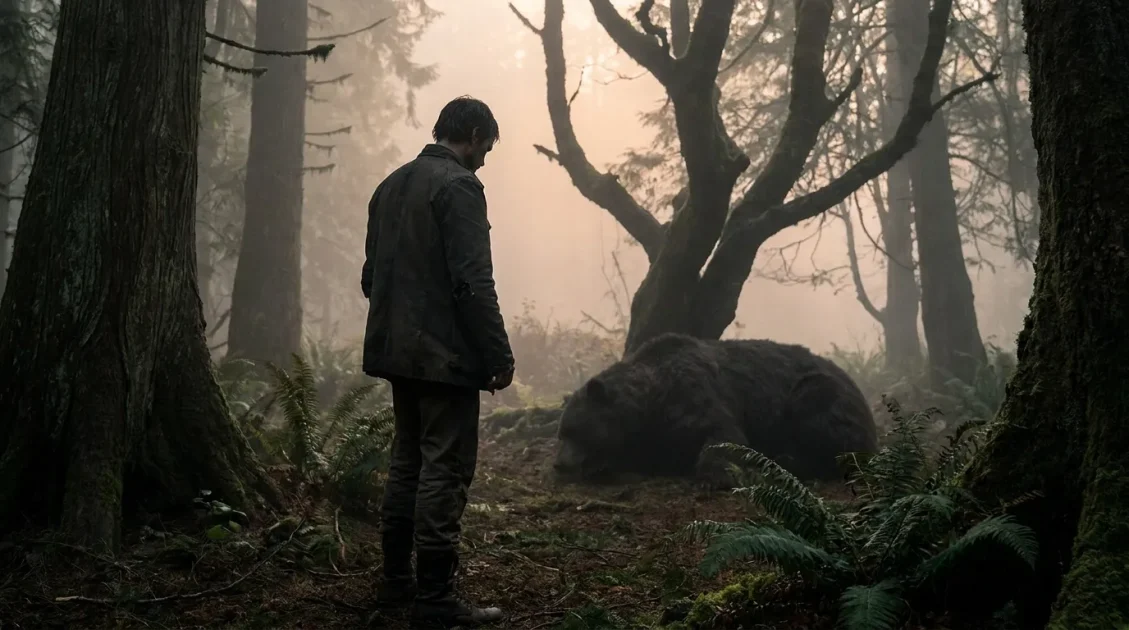
Killing a bear in a dream can feel victorious, disturbing, or both.
On one level, it may represent overcoming a large obstacle. You faced the thing. You survived. You won.
But dreams are rarely that flat.
If you kill the bear and feel relief, the dream may point to courage, release, or the end of intimidation. If you feel guilt, grief, or shock, the dream may be asking whether you are cutting off a valuable part of yourself along with the threat.
Maybe the bear was your anger, and you finally controlled it.
Maybe the bear was your instinct, and you silenced it too much.
Maybe the bear was a person’s hold over you, and the dream shows emotional separation.
A useful question here is:
What did the bear represent before it died?
If it represented fear, the dream may feel freeing.
If it represented protection, the dream may feel like loss.
If You Are the Bear

Dreaming that you are a bear is usually about identity.
This may suggest independence, confidence, anger, solitude, physical power, emotional defense, or the desire to be left alone. It can also show that you are tired of being small in situations where you need to take up space.
This dream can be uncomfortable for people who are used to being agreeable.
You may wake up thinking, “Why was I so wild?”
But maybe wild is not the same as wrong.
Maybe the dream is showing you a self that does not apologize for existing. A self that protects what matters. A self that does not explain every boundary ten times before enforcing it.
Of course, if you were as destructive as a bear, the dream may be warning you about uncontrolled anger. But if you felt strong, alert, and steady, it may be a sign that your inner life is asking for more courage.
The Spiritual Meaning of Bears in Dreams
Spiritually, bears often symbolize strength, protection, solitude, endurance, instinct, and renewal.
A bear dream may appear during a season when you are being asked to grow stronger, but not in a loud or performative way. Bear strength is not frantic. It is grounded. It knows when to act and when to withdraw.
This is why bear dreams can connect with spiritual maturity. They often ask for discernment:
Do not attack everything.
Do not fear everything.
Do not abandon your instincts.
Do not confuse peace with passivity.
Some spiritual interpretations also connect bears with guardianship, especially if the bear is calm, watchful, or standing between you and danger. If the bear feels threatening, the dream may be a warning about pride, rage, fear, or a force in your life that needs prayerful attention.
Dreamwork writers often argue that dreams become more useful when the dreamer pays attention instead of dismissing them, and that the dreamer’s own life context is central to interpretation. I agree with that deeply. A dream symbol does not become meaningful just because a website says so. It becomes meaningful when it helps you recognize something true.
If your bear dream felt spiritually intense, you may also want to read about the spiritual meaning of vivid dreams or the signs of spiritual attack in dreams for a broader view.
The Psychological Meaning of Bear Dreams
Psychologically, a bear dream may reflect instinctive emotion.
That includes fear, anger, protection, stress, desire for solitude, or a need to reclaim personal power. The bear can act like a dramatic image for something your waking mind has not fully named yet.
This does not mean every dream has a hidden code. It means dreams often use emotion first and logic second.
The American Psychological Association reported research by Morewedge and Norton showing that people often treat dreams as meaningful and that dream interpretations can affect attitudes and decisions. That is important. It means dream interpretation can help, but it can also mislead if you treat one dream as absolute proof.
A bear dream should make you curious, not reckless.
Do not end a relationship because you dreamed of a bear.
Do not assume disaster is coming.
Do not accuse someone of being the bear without evidence.
Instead, use the dream as a mirror. What feeling did it reveal? What pattern did it highlight? What decision have you been delaying?
A dream can start the conversation. It should not be the only evidence.
What Most People Get Wrong About Bear Dreams
The biggest mistake is asking, “Is a bear dream good or bad?”
That question is too small.
A bear dream can be frightening and still helpful. It can be peaceful and still serious. It can be spiritual without being supernatural in a dramatic way. It can be psychological without being meaningless.
Another mistake is treating the bear as automatically external. Many people assume the bear is another person: a boss, parent, partner, enemy, or controlling figure. Sometimes it is. But sometimes the bear is you.
Your anger.
Your strength.
Your protective instinct.
Your exhaustion.
Your refusal to keep shrinking.
The dream may not be warning you about someone else’s power. It may be introducing you to your own.
How to Interpret Your Bear Dream Without Overthinking It
Start simple.
Write the dream down as soon as you can. If you need help building the habit, use this dream journal template PDF as a simple starting point.
Then answer these questions:
What was the bear doing?
Was I afraid, calm, curious, angry, protected, or trapped?
Where was the bear?
Was it alone, with cubs, sleeping, chasing me, attacking, or watching?
Who or what in my waking life gives me the same feeling?
What did I want to do in the dream but could not do?
What would a wise response look like in real life?
Do not force a meaning in the first five minutes. Let the dream breathe. Sometimes the meaning becomes obvious only after you notice the emotional match in waking life.
If you want a broader foundation, this guide on why we dream from a scientific and psychological view can help you balance spiritual curiosity with grounded reasoning.
FAQs About Bear Dream Meaning
What does it mean when you dream about a bear?
Dreaming about a bear often means you are dealing with power, fear, protection, anger, boundaries, or a need for solitude. The meaning depends on the bear’s behavior and your emotional response. A chasing bear may point to avoidance, while a calm bear may suggest protection or inner strength.
Is a bear dream a warning?
A bear dream can be a warning, but not always in a literal sense. It may warn you that a conflict, emotion, responsibility, or boundary issue needs attention. If the dream repeats or leaves a strong feeling, write it down and compare it with what is happening in your waking life.
What does it mean if a bear chases you in a dream?
A bear chasing you often suggests you are avoiding something that feels powerful or intimidating. This may be a person, a conversation, a decision, or an emotion like anger or grief. The dream may be asking you to stop running and face the issue with more honesty.
What does a friendly bear mean in a dream?
A friendly bear may symbolize safe strength, protection, emotional maturity, or a powerful part of yourself that no longer feels threatening. It may also represent someone you once feared but now understand differently. Pay attention to whether the bear felt comforting, playful, watchful, or wise.
Are bear dreams always about anger?
No. Bear dreams can involve anger, but they can also point to rest, motherhood, courage, independence, spiritual protection, or personal boundaries. The common misconception is that a bear always means danger. In many dreams, the bear represents strength that needs to be understood, not feared.
Final Thoughts
A bear dream is not something to flatten into one sentence.
It deserves more respect than that.
The bear may be the thing you fear, the strength you need, the boundary you keep delaying, the rest your body is asking for, or the protective force rising inside you. The meaning is usually found in the meeting point between the dream image and your real life.
So do not ask only, “What does the bear mean?”
Ask, “What part of my life has become too powerful to ignore?”
That question may take you closer to the truth than any dream dictionary ever could.
Sources & Further Reading
If you want to go further with any of this, here are a few things worth your time:
Michael Schredl’s research on continuity between waking life and dreaming, especially his work on how waking activities and concerns appear in dreams.
Katja Valli and Antti Revonsuo’s work on threat simulation theory, which explores how dreams may simulate threatening situations.
Carey K. Morewedge and Michael I. Norton’s study, “When Dreaming Is Believing,” published in the Journal of Personality and Social Psychology, examines how people interpret dreams and how those interpretations can affect waking judgments.
Mindbodygreen’s interview-based article on bear dreams, especially its point that the dreamer’s feelings and life context are central to interpretation.
The BetterSleep guide on bear dream scenarios is useful as a broad dream-symbol reference when read with personal context in mind.
Have you had a bear dream that stayed with you after waking? Write down the bear’s behavior, your feelings, and what in your life currently matches that emotional weight. That small record may tell you more than the dream first seemed willing to say.
