

Quick Takeaways
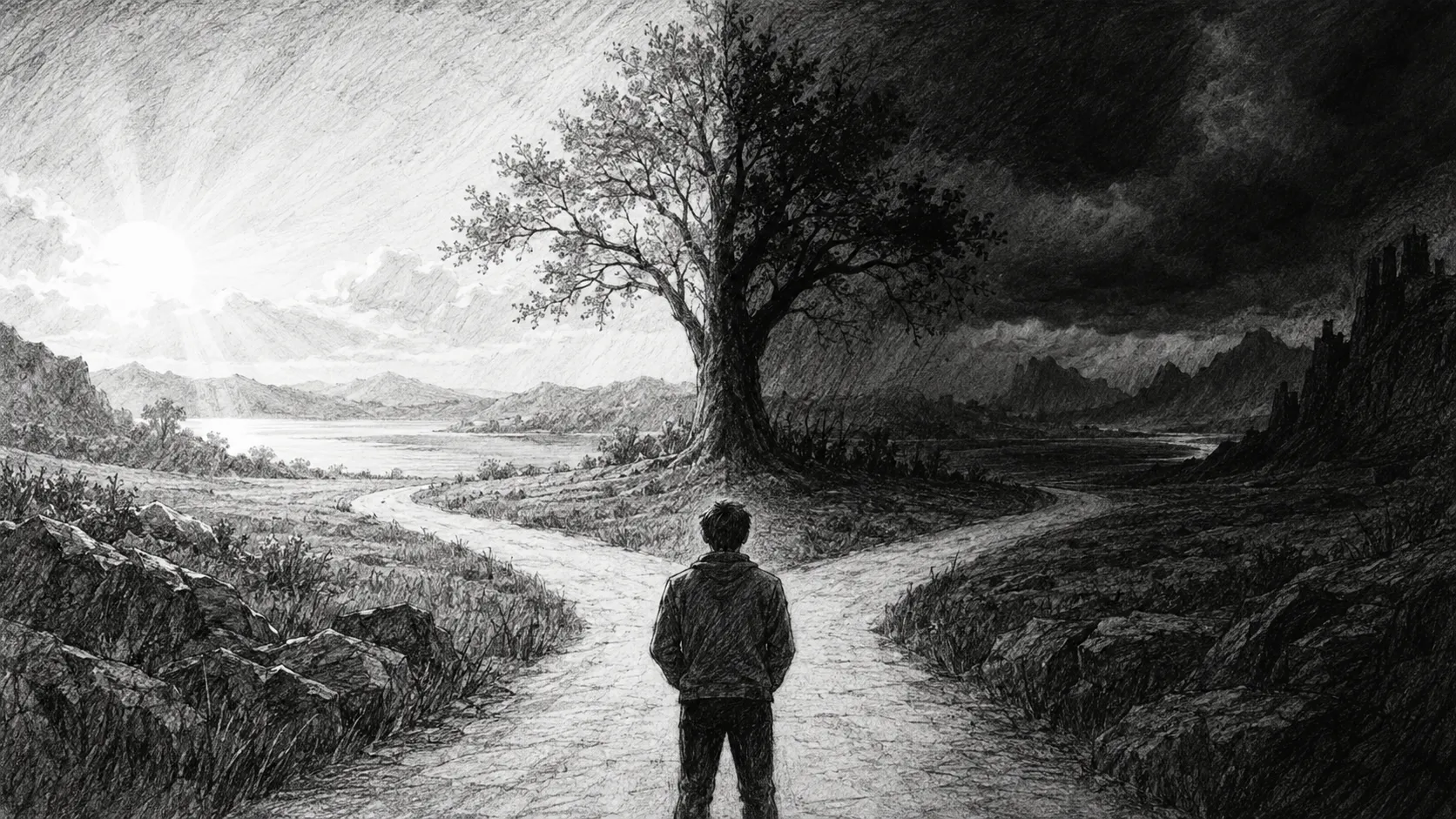
- A black-and-white dream could be indicating contrast, discernment, emotional distance, simplicity, or the fact that you are looking at a situation in an either-or manner.
- When interpreting the dream biblically or spiritually, one should take into account the entire dream, the emotions it has caused, and your own personal associations rather than automatically attributing meanings to black and white.
- Dream symbolism cannot be regarded as certain or predictive; if recurring dreams are causing you distress, are disrupting your sleep, or are affecting your daily activities, it would be a good idea to consult a qualified mental health or sleep professional.
It can be quite noticeable to dream in black and white, particularly when your normal dreams involve colour. If you’re looking for the spiritual significance of black and white dreams, the most helpful answer is that they don’t have a single definite meaning. Instead, the meaning of such dreams may vary according to what was going on, how you felt, what black and white signifies to you, and the circumstances of your everyday life.
A colorless dream may lead one to think about contrast, clarity, hidden emotions, moral decisions, or aspects of life which have a subdued emotional tone; for certain individuals it might also recall biblical representations of light and darkness. Yet these associations should be regarded as possibilities, not as evidence that the dream came from God or as a prediction of what will happen in the future.
A good first rule is that the person who is having the dream is usually the most suitable interpreter since the meaning of symbols is derived from personal experience, memory, emotion, and belief.
What is the spiritual meaning of dreams involving black and white?
The spiritual significance of a black-and-white dream usually lies in contrast, since with colour taken away the differences may appear more distinct—such as between the known and the unknown, right and wrong, the past and the present, attachment and detachment, and fear and peace.
It doesn’t follow that each monochrome dream indicates a moral conflict; at times the lack of colour may just correspond to the emotional tone. A quiet black-and-white landscape may seem peaceful and concentrated, while the same visual style in a threatening dream can seem cold or distant.
Several interpretations may be worth considering:
| Possible meaning | What to reflect on |
| Discernment or clarity | Are you trying to see a situation more clearly? |
| Either-or thinking | Are you treating a complicated issue as if only two choices exist? |
| Emotional distance | Did the dream feel numb, detached, or strangely flat? |
| The past or memory | Did the scene resemble an old photograph, film, or earlier period of life? |
| Integration of opposites | Are two sides of yourself or a decision asking for attention? |
The interpretation that is most compelling is typically the one which agrees with both the dream and your present situation without having to force the symbolism.
This guide to dream interpretation may assist you in examining symbols more generally instead of using fixed definitions by taking into account context, emotion, and your personal associations.
Black and White Dreams Spiritual Meaning in a Biblical Context
The Bible includes a number of dreams, yet it doesn’t say that dreaming in black and white has one particular biblical meaning. The Scripture does, however, record dreams that are connected with guidance, warnings, symbolic imagery, and interpretation. Mr. Kenneth Gray’s account of biblical dreams also gives Joseph, Daniel, and Joseph, the husband of Mary, as examples of dream experiences in the Scriptures.

Book About Dreams
The Magic of the Night
This book is perfect for anyone seeking to understand the messages and meanings hidden in their dream life. It offers a clear framework for interpreting dreams with real examples and thoughtful insights.
Get the Book- Based on personal dream journals
- Step-by-step interpretations
- Perfect for dream seekers
How to Interpret Biblical Light and Darkness in Dreams
Since light and darkness are often used symbolically in the Bible, a Christian dreamer might identify white with light, purity, revelation, or holiness and black with darkness, grief, concealment, or the unknown. These associations should not be turned into a strict code.
Just because an object is dark in a dream does not mean that it is evil, and merely because an object is white does not make it divine. Just as important are the action, the setting, the emotional tone, and the personal significance.
For example, consider a room which is black and white with a single open door leading into the light. In a spiritual sense, attention might be less directed at the absence of colour and more focused on the significance of the door to the person having the dream. It might imply hope, understanding, a decision, or a transition from one mental state to another.
Anyone who enjoys comparing the imagery in dreams with that found in the Scripture might also make use of a dictionary of biblical dream symbols as a starting point, even as they look at the dream in its entirety.
Can there be a psychological explanation for dreaming in black and white?
Yes, a monochrome dream does not require a spiritual explanation in order to be meaningful.
It has been suggested that individuals vary in the way they experience and remember colour in their dreams. A study discovered that people who had been previously exposed to more black-and-white media were more likely to report having grayscale dreams. Furthermore, research into the reporting of dreams indicates that the colour aspects that people remember might to some extent depend on when and how they are asked to recall the dream.
This is important since dream recall is incomplete; you might have a clear memory of the people, the actions, and the feelings from a dream even though your memory of its colours is poor. On other occasions, the black-and-white aspect may in fact be one of the most memorable features.
From a psychological point of view one might consider whether the dream is connected with memory, stress, emotional distance, or with all-or-nothing thinking; whereas from a spiritual point of view one might think about what the contrast causes you to notice regarding your beliefs, values, relationships, or inner life. Neither of these two perspectives should lead us to assume that it offers a definitive answer.
If you want to find out more about how waking experiences and hidden associations can influence the content of dreams, look into the role of the subconscious mind.
How the Details Change the Meaning of a Black-and-White Dream
A black-and-white dream is more useful if you go beyond the question of “What do black and white symbolize?” and consider instead what actually took place.
If the Entire Dream Was Black and White
What about the atmosphere? Was it calm, serious, empty, nostalgic, sacred, lonely, or unusually clear?
A peaceful grey dream could indicate simplicity or concentration, while a bleak one might show emotional distance or sadness. It is the emotional reaction that gives more context than the lack of colour alone.
If One Person Appeared in Black and White
Consider what that person means to you; you might be feeling distant from them, unsure regarding the relationship, have a sense of nostalgia for the past, or be concentrating on an older memory of who they were.
You should not regard the visual impression as proof of the person’s intentions since dreams may be based on your own memories, fears, expectations, and unresolved emotions.
If Color Suddenly Appeared
The change from a black-and-white dream to a coloured one might be significant. This shift could signify an increase in emotion, attention, vitality, recognition, or a change in perspective.
If the experience was particularly realistic, then compare it to typical accounts of vivid dreams and what spiritual meaning they have.
If the Black-and-White Dream Keeps Returning
A dream that keeps recurring might be an indication that your mind is still bringing up that particular subject. The fact that it repeats does not prove that a supernatural warning is being conveyed.
Look at the differences between the various versions of the dream. It’s possible that the setting remains unchanged but your reaction does. This change might tell you more than the dream image itself. Additionally, you can investigate the spiritual significance of recurring dreams as a more comprehensive method.
How to Interpret a Black-and-White Dream Step by Step
1. It is necessary to record the dream before interpreting it.
As soon as you have woken up, write down the dream. Make sure to include details about the people, the setting, the objects, the dialogue, the movements, and whether the entire scene was in black and white or if only some parts were.
Details tend to disappear quickly. When it is difficult to recall your dreams, these methods for remembering dreams might help you keep more of them before you start to interpret them.
2. Determine the strongest emotion.
Inquire as to how you felt both in the dream and after you had woken up, since feelings such as peace, fear, sadness, relief, confusion, awe, and numbness may all lead to quite different interpretations.
It would be a mistake to suppose that black has to be negative or that white has to be positive. A dark room may give a sense of safety, whereas a brightly white room can cause discomfort.
3. Consider what black and white mean to you
Think about the associations that you have yourself; black and white might take you back to old photographs, classic films, periods of mourning, a formal atmosphere, simplicity, nostalgia, or a sense of moral certainty.
A symbol might bring comfort to one individual but could cause disturbance to another, which is why it is important to take personal context into account.
4. Link the dream to your present life
Consider the thing which was occupying your attention before the dream. Are you at that moment making a difficult decision? Are you going over past events? Do you feel emotionally disconnected? Are you questioning your beliefs?
Don’t adjust your life to match the dream; rather, find a natural link between the emotional pattern of the dream and one of your current experiences.
5. Carefully consider the spiritual and biblical meanings.
Should faith be important to you, then you should pray, think about it, or compare the dream with scriptural themes which actually correspond to the content of the dream.
A dream can seem to have spiritual importance even if not every image acts as a divine directive. It is advisable not to make important decisions based just on symbolic imagery, particularly when the interpretation relies greatly on assumptions.
6. Track the Pattern
A single monochrome dream might be remembered. More similar dreams can offer more stuff for reflection.
Keep a record of the people, places, emotions, and changes in colour you experience. Eventually, you might find that black-and-white dreams occur when you are making certain decisions, recalling memories, or undergoing particular emotional states.
When a Black-and-White Dream Feels Disturbing
Certain dreams stay clear because they involve grief, trauma, conflict, or fear. If a dream leaves you disturbed, then it may be helpful to journal it, pray, spend some time in quiet reflection, or talk to someone you trust in order to work through the experience.
If the dreams that occur repeatedly cause you a great deal of distress, disrupt your sleep, or make your everyday life more difficult, then you should think about consulting a qualified mental health professional or a sleep specialist. There is no need for professional help and spiritual reflection to conflict; in fact, they can deal with different aspects of the experience.
Conclusion
The spiritual meaning of black and white dreams should be seen as something to reflect on rather than interpreted through a set symbolic system. Such monochrome dreams might be highlighting aspects such as contrast, clarity, emotional distance, memory, spiritual discrimination, or the way you are viewing a particular situation. Although biblical imagery can provide an additional dimension, the Scripture itself does not give a single universal interpretation to dreaming in greyscale.
Begin by looking at the dream itself; make a note of what took place, pay attention to the emotions you experienced, and think about what black and white mean to you personally. If the images come back, then stick to the pattern rather than jumping to a conclusion. In this way you can more effectively explore what the dream might be trying to tell you.
Frequently Asked Questions
Is it possible that black-and-white dreams are a spiritual message?
They may seem to have a spiritual significance, particularly if the dreams are vivid, emotional, or relate to questions of faith and purpose. Yet since there is no reliable method of proving that a black-and-white dream is a supernatural message, any such spiritual meaning should be considered in light of the individual’s personal circumstances and the normal processes that occur in dreams.
What does the Bible have to say regarding dreaming in black and white?
The Bible includes a number of significant dreams, but it gives no specific interpretation of dreams that are in black and white. When a Christian examines the biblical ideas concerning light, darkness, truth, wisdom, and discernment, they need not assume that the presence of colour alone determines the meaning.
That is why I dream in black and white while other people dream in colour.
People’s experiences of and memories of coloured dreams differ, and studies indicate that exposure to media and the way in which they recall their dreams may affect the accounts of having black-and-white dreams. The fact that a dream is colourless does not mean that it is more spiritual or more alarming.
Does does black in a dream stand for evil and white for God?
It doesn’t have to be so. Although black and white may have religious connotations, dream symbols also vary according to context, emotion, culture, and personal experience. Automatically considering black as evil and white as holy might result in an interpretation that fails to capture how the dream actually felt.
What can be inferred if a black-and-white dream which used to occur repeatedly all of a sudden starts to be in colour?
A shift into color may reflect a change in emotion, attention, memory, or perspective, especially if the transition feels important within the dream. Compare what changed in the dream with what has changed in your waking life rather than assuming the new colors predict an event.
