

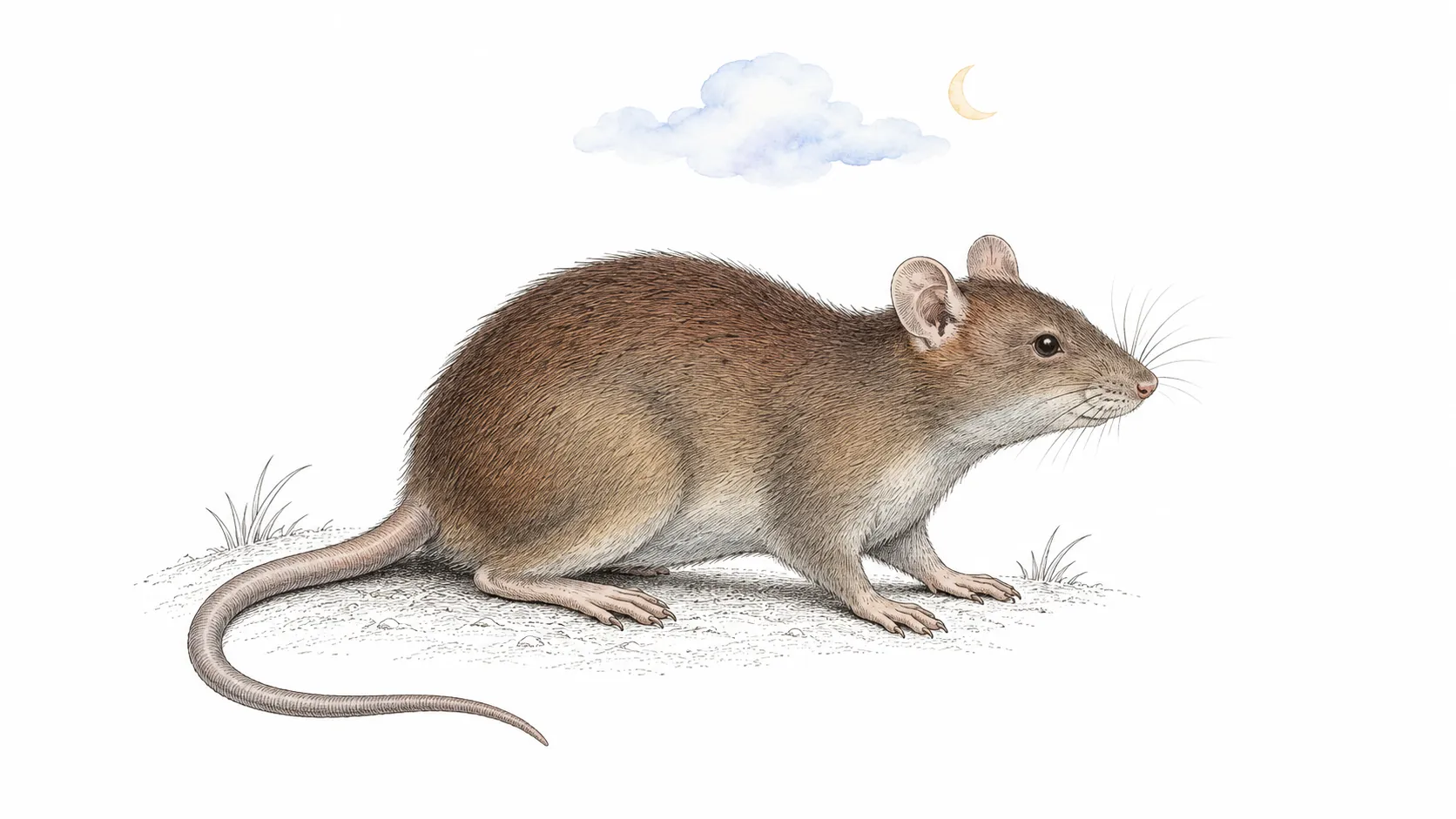
Your reaction to the animal offers a better starting point than a dream dictionary.
A rat appearing in your dream can feel disturbing, but a Jungian interpretation begins with what that animal means to you. Rat symbolism might suggest an unwanted feeling, a survival instinct, or something you have overlooked, depending on the dream’s events and your personal associations.
In Jung’s interpretation of dreams, context matters more than assigning an animal one permanent meaning. A frightened rat hiding beneath a chair presents a different question from a rat you willingly feed. Looking closely at those differences gives you a useful way to explore the dream without treating it as a prediction or an accusation against someone else.
Jung’s interpretation of dreams: Rat symbolism starts with context
The first question is simple: What comes to mind when you think about rats?
Your answer might be disease, a childhood pet, an unpleasant apartment, intelligence, or an animal that survives difficult conditions. Those associations provide different starting points for interpretation.
In Collected Papers on Analytical Psychology, Jung cautioned against treating dream symbols as fixed and unchanging. His approach leaves room for recurring symbolic patterns while requiring attention to the individual dreamer. A dictionary entry cannot settle what an image means in a particular dream. gutenberg.org
Before choosing an explanation, record three details:
- What the rat did.
- What you felt during the encounter.
- What happened immediately before and afterward.
A rat running away from you may seem threatening, yet its behavior could also appear frightened. That difference matters. Were you trying to protect yourself, remove an inconvenience, or destroy something that had not harmed you?
This approach to interpreting your dreams keeps the whole scene in view. The animal is one part of the story, alongside your actions, the setting, and the ending.

Book About Dreams
This book is perfect for anyone seeking to understand the messages and meanings hidden in their dream life. It offers a clear framework for interpreting dreams with real examples and thoughtful insights.
Get the Book- Based on personal dream journals
- Step-by-step interpretations
- Perfect for dream seekers
Could the rat represent your shadow?
In Jungian psychology, the shadow refers to aspects of yourself that you do not recognize or readily accept. These can include uncomfortable feelings and impulses, but also useful qualities you have learned to reject.
Christopher Perry’s explanation for the Society of Analytical Psychology emphasizes that the shadow can contain positive capacities. Someone who equates assertiveness with selfishness, for example, may push aside both their resentment and their ability to defend a reasonable boundary. Society of Analytical Psychology
Applied cautiously to a rat dream, this raises a possibility: the animal might represent a feeling or quality you find difficult to acknowledge.
Imagine that you associate rats with taking whatever they need. You also feel ashamed whenever you ask for help. A dream about a hungry rat could prompt you to examine your attitude toward having needs.
That is a hypothetical reading, not an established meaning of hungry rats.
The useful question is, “What about this animal feels unacceptable to me?” Your answer might involve greed, dependency, persistence, anger, or vulnerability. Explore the association that actually fits your experience, including the possibility that no shadow interpretation fits at all.
Why might a dream challenge your waking attitude?
Jung proposed that dreams can compensate for a person’s conscious attitude. In everyday language, a dream may introduce a perspective that receives too little attention while you are awake. The International Association for Analytical Psychology describes compensation as an adjustment between viewpoints, rather than a rule that every dream shows the opposite of waking life. IAAP
Consider this hypothetical example: you insist that nothing bothers you, even while a small workplace disagreement occupies your thoughts. That night, you dream of scratching behind a wall that everyone else ignores.
A possible reading concerns the experience of dismissing a persistent concern. The dream does not establish that a colleague is dishonest or that something dangerous is happening.
For someone who already worries intensely about minor problems, the same scene would need a different discussion. Interpretation depends partly on what the person already notices and what they habitually overlook.
When exploring the role of the subconscious, keep the distinction clear: Jungian theory offers a way to reflect on experience. It does not make a symbolic explanation automatically correct.
How do the rat’s actions change the interpretation?
Looking up “rat dream meaning” can flatten very different dreams into one answer. Instead, examine the relationship between you and the animal.
The following possibilities are reflection prompts, not meanings established by Jung.
| Dream scene | A possible direction to explore | A question to ask yourself |
|---|---|---|
| A rat hides inside your home | Privacy, belonging, or an overlooked concern | What feels difficult to acknowledge in my personal life? |
| A rat chases you | Your experience of pressure or avoidance | What am I trying to get away from, and does that connection fit? |
| A rat bites you | The feeling of being hurt, interrupted, or challenged | Which recent experience had a similar emotional quality? |
| You feed a frightened rat | Care for something you initially rejected | What changes when I respond with curiosity or compassion? |
| You try to kill a rat | Your response to something unwanted | Did I feel relieved, guilty, powerful, or still afraid afterward? |
| A rat escapes confinement | Freedom, loss of control, or unfinished action | Was its escape a problem for me or a relief? |
Notice that the final column asks questions. It does not identify a hidden enemy or announce a future event.
The setting also needs your associations. A childhood kitchen might connect with family memories. A laboratory could suggest your work, a documentary, or an experience of being observed. Neither location has to carry a universal psychological meaning.
Other animals in the scene deserve the same attention. If a cat pursues the rat, your feelings about both animals matter. Exploring cats in dreams may offer another perspective, but avoid assigning the cat a fixed role as protector or the rat a fixed role as villain.
Can two people have similar rat dreams with different meanings?
Yes. Their personal associations can lead the discussion in different directions.
Consider two fictional examples involving a rat under a kitchen table.
Example one: The unwanted intruder
A person dreams that a rat slips beneath the table during dinner. They feel disgusted and worry that their guests will notice. They spend the rest of the dream trying to conceal it.
During reflection, they remember a recent argument they have hidden from their family because they want everyone to think the household is peaceful.
One possible interpretation concerns embarrassment and the effort to maintain appearances. The concealment may be more relevant than the rat itself.
However, the person also saw a pest-control advertisement that evening. That recent exposure belongs in the discussion too. A symbolic reading should account for ordinary context.
Example two: The frightened animal
Another person dreams of the same location but notices that the rat is trembling. They place food nearby and feel relieved when it begins eating.
This person once cared for a pet rat. They are also struggling with embarrassment about needing support after a difficult move.
A possible interpretation concerns allowing vulnerability and accepting care. A reading centered on contamination or betrayal would overlook the dream’s emotional tone.
These examples illustrate a method. They are not reports of actual clients or evidence that a particular interpretation is correct.
What can the Pied Piper add to a Jungian reading?
Jungian discussions sometimes use myths and stories to broaden an image’s possible associations. This process is often called amplification.
In his discussion of the Pied Piper, Joseph R. Lee of This Jungian Life explores the rats through the idea of rejected shadow material. His reading asks what might be lost when people try to banish everything they find undesirable. It is a contemporary Jungian interpretation of the story, rather than a statement that Jung assigned every rat dream that meaning. thisjungianlife.com
That perspective can support a question such as, “Am I rejecting a useful part of myself because I dislike how it appears?”
Perhaps you dislike the rat’s persistence but also struggle to keep pursuing something important. Perhaps its hunger bothers you because you judge your own needs harshly.
Use the story only if it helps explain your dream. A compelling myth can become a distraction when its themes have little connection to the details you remember.
How do you separate psychological interpretation from spiritual belief?
A psychological interpretation asks how a dream might relate to your feelings, relationships, memories, and attitudes. A spiritual interpretation may ask whether it holds religious or personal significance.
You can consider both perspectives while being clear about what each one claims.
For example, “This rat reminds me of something I feel ashamed about” is an observation about your association. “This dream proves that someone has spiritually attacked me” makes a much larger claim that the image alone cannot establish.
Likewise, calling someone a “rat” in ordinary speech may influence your associations with betrayal. It does not turn a dream into evidence that a friend or partner has deceived you. Evaluate concerns about another person through their actual behavior.
Scientific questions about why we dream also differ from questions about what one dream means to an individual. Explaining a process involved in dreaming would not, by itself, verify a symbolic interpretation.
You can value a dream as a prompt for reflection while leaving its ultimate significance unsettled.
Book About Dreams
This book is perfect for anyone seeking to understand the messages and meanings hidden in their dream life. It offers a clear framework for interpreting dreams with real examples and thoughtful insights.
Get the Book- Based on personal dream journals
- Step-by-step interpretations
- Perfect for dream seekers
A practical exercise for exploring your rat dream
This exercise helps you develop a tentative interpretation and check whether it fits. You do not need to reach a conclusion in one sitting.
1. Write the scene before explaining it
Describe what you remember in plain language:
“A small rat sits beside my shoes. I move away. It follows me but does not attack.”
Keep observations separate from interpretations. “The rat follows me” describes the scene. “The rat wants to ruin my life” adds a motive you may not have observed.
If you remember only fragments, record those. These suggestions for remembering your dreams can help you approach future entries more consistently.
2. Name the emotion precisely
Try to distinguish fear from disgust, embarrassment from guilt, or tenderness from pity.
Then ask whether the emotion changed. You might initially fear the rat and later realize it is injured. That change could be more useful than its size or appearance.
Also separate your feelings during the dream from your reaction after waking. A dream that felt peaceful can become frightening after you read an alarming interpretation online.
3. List your own associations
Write a few words or memories connected with rats before consulting another source.
Possible associations include a former pet, a basement, a film, an expression such as “rat race,” or an encounter at work. These are prompts to jog your memory, not a list of meanings to adopt.
Stay close to associations you can explain. If “rat race” comes to mind because you feel exhausted by competition, describe that connection in your own words.
4. Consider more than one explanation
Write two or three possibilities, including an ordinary one.
For the rat beside your shoes, you might consider:
- A persistent concern you would prefer to avoid.
- A vulnerable part of yourself seeking attention.
- An image connected with something you recently saw or discussed.
Then check each possibility against the dream. Does it explain your emotion and the rat’s behavior? Which details does it leave unexplained?
Avoid choosing an interpretation solely because it sounds dramatic.
5. Choose a proportionate next step
If the dream brings an unfinished concern to mind, write down what you need to address. If it reminds you of an abandoned creative interest, set aside a little time for it. If no interpretation fits, keep the record without forcing an answer.
When rat dreams repeat, a recurring dream cycle tracker can help you compare dates, emotions, and changes in the scenes. Use it to observe patterns rather than to confirm a predetermined meaning.
The International Association for the Study of Dreams emphasizes working with the dreamer’s own images, feelings, and associations, while allowing multiple layers of meaning. That principle leaves room for uncertainty and personal judgment. asdreams.org
Frequently Asked Questions
What does a black rat versus a white rat mean in a Jungian dream interpretation?
Color alone does not establish a Jungian meaning. Ask what black or white suggested within this particular dream, including any personal memories attached to the animal. Treat claims that black rats always mean danger or white rats always mean good fortune as interpretive conventions, not dependable rules.
What does dreaming about a pet rat that has died mean?
Begin with your relationship with the pet and the emotion of seeing it again. The dream may invite reflection on that bond, your memories, or feelings connected with its death, but no single explanation follows automatically. Experiencing the dream as spiritually meaningful is a personal interpretation; its content does not independently establish a visitation.
Does dreaming of a rat mean someone close to me is betraying me?
A rat dream cannot establish that another person has betrayed you. If betrayal comes to mind, explore why that association feels relevant and distinguish existing concerns from evidence. Decisions about trust should rest on what happens in the relationship.
Why might the same rat dream return after I have resolved a problem?
The original interpretation may have been incomplete, or the repeated scene may connect with another experience. Compare what has changed in the dream, especially your response and its ending. Repetition alone does not prove that you failed to understand a message.
Can I interpret a rat dream if I remember only the animal?
You can record your reaction and associations, but the missing context limits any conclusion. A remembered image offers less information than a scene with actions, emotions, and an ending. Keep your interpretation tentative, and resist filling the gaps with details from a dream dictionary.
