

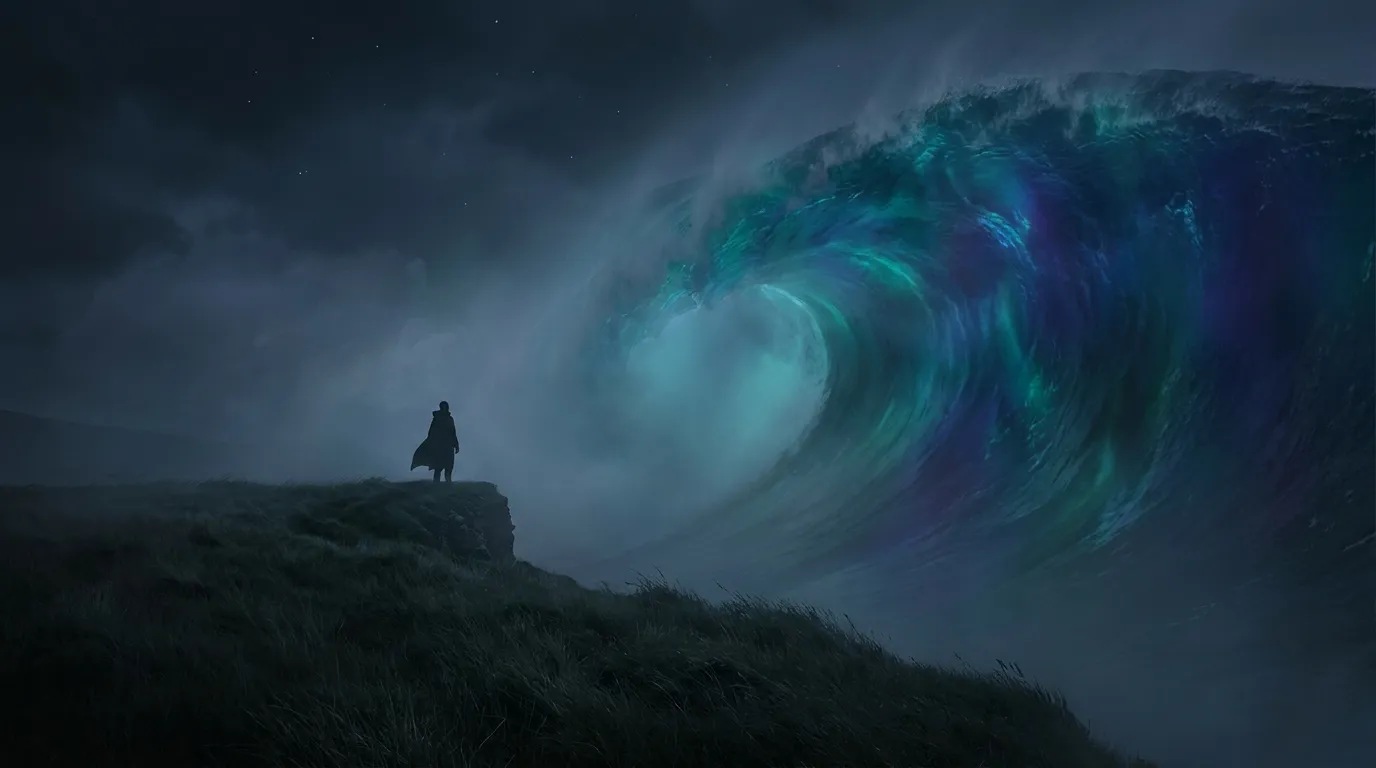
You wake up with your heart hammering against your ribs. Your sheets are tangled around your legs. The image is seared into your mind: a wall of water, towering and dark, crashing toward you. It is one of the most visceral experiences a sleeper can have.
For a few seconds, you might lie there, checking to make sure the room is dry. You check the window. The street is fine. The world is intact. But the fear feels real. It lingers. If you have googled “tsunami dream meaning,” you are likely looking for answers. You want to know if it is a warning. You want to know if you are losing control.
Most articles will tell you that a tsunami dream means you are stressed. They will say it represents “overwhelming emotions.” While that is true, it is only the surface of the water. It is the basic answer.
There is a deeper, more useful meaning behind these visions. A tsunami in your sleep is not just a symbol of panic. It is a specific message from the role of the subconscious mind about how you handle pressure, how you view your own power, and what you are hiding from yourself. These dreams are a “purposeful activity” designed to facilitate “consciousness expansion.” To understand the true meaning, we have to look past the disaster. We have to look at the water as a carrier of “intense life energy” and “revelation of truth.”
The Quick Takeaway:
A tsunami dream typically signals a “shocking” influx of repressed emotional energy or spiritual power that your conscious mind is struggling to contain. It represents a “meaningful message” that your internal landscape is shifting to accommodate a higher level of awareness or to clear old psychological structures.

Book About Dreams
The Magic of the Night
This book is perfect for anyone seeking to understand the messages and meanings hidden in their dream life. It offers a clear framework for interpreting dreams with real examples and thoughtful insights.
Get the Book- Based on personal dream journals
- Step-by-step interpretations
- Perfect for dream seekers
The Core Symbolism: Water and the Unconscious
To understand the wave, you must understand the element. In the language of dreams, water almost always represents the emotional state and the unconscious mind.
Think about the nature of water. It’s fluid. It is deep. It is often dark. When you dream of a pool, you are looking at contained emotions. When you dream of a calm ocean, you are looking at a broad spiritual or emotional peace.
But a tsunami is different.
A tsunami is a displacement of energy. It happens when the earth shakes deep below the surface. This is the perfect metaphor for the psychological state that gives rise to these dreams.
You do not dream of tsunamis when you are mildly annoyed. You dream of tsunamis when something has shifted fundamentally in your foundation.
- The Ocean: Represents the vastness of your emotional life or the collective unconscious.
- The Earthquake (The Cause): Often hidden in the dream, this represents a shift in your stability, values, or security.
- The Wave (The Effect): The visible result of that shift. It is the emotion you can no longer ignore.
Common Tsunami Dream Scenarios (And What They Say About You)
Generic interpretations fail because they treat all tsunami dreams the same. They do not account for the specific details. Your role in the dream changes the meaning entirely.
Here are the most common scenarios and the specific psychological needs they reveal.
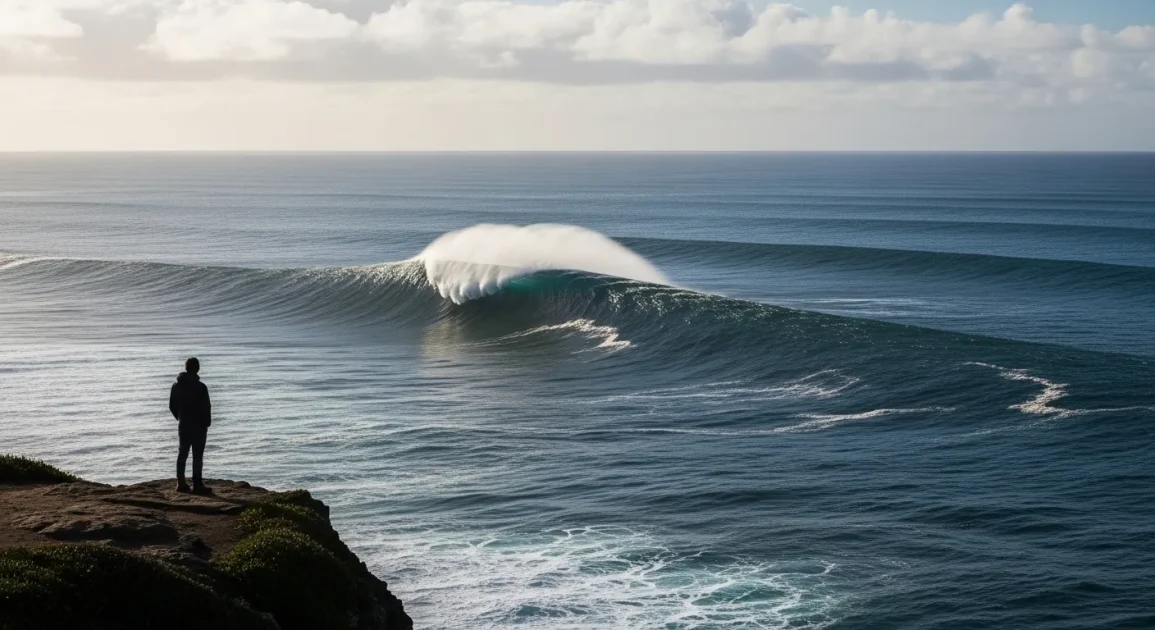
1. Watching the Tsunami from a Distance
In this dream, you are safe on high ground. The wave forms in the distance, crashing with immense power. Fear might be present, yet you remain safe from the impact.
The Meaning: This suggests a state of detachment. You are currently observing a crisis in your waking life, but you are not “in it.” This could relate to:
- A problem at work that isn’t your direct responsibility but affects your environment.
- A friend or family member is going through a crisis that you feel helpless to fix.
- A looming life change (retirement, moving) that you know is coming but haven’t emotionally engaged with yet.
This dream is a signal that you are buffering yourself. You are safe, but you are also a spectator. It asks: Are you too detached? Are you avoiding involvement that is required of you?
2. Being Hit and Swept Away
This is the most common and terrifying variant. The wave hits you. You’re tumbling under the water. You cannot breathe. You are fighting the current.
The Meaning: This is a classic signal of emotional overwhelm. You feel that life is “happening to you.” You feel powerless against forces you cannot control.
- Financial Stress: A debt or job loss that feels insurmountable.
- Relationship Breakdown: A breakup or conflict where you feel your voice isn’t heard.
- Health Issues: A sudden diagnosis or health scare.
However, this dream has a hidden layer. By sweeping you away, the water is forcing you to surrender. It is a sign that your current strategy for fighting for control is not working. The dream is telling you that you cannot fight the current; you must learn to swim or float.

3. Surviving the Wave
You are hit. The water crashes over you. But you survive. You might be washed up on a shore, wet and shaken, but alive.
The Meaning: This is a profoundly positive dream, despite the fear it generates. It signifies resilience. Your unconscious mind is running a simulation. It is testing your ability to withstand a catastrophe.
- It shows that you have the internal resources to handle what is coming.
- It suggests that while the situation is bad, it is not fatal.
If you have this dream, your mind is trying to boost your confidence. It is showing you the worst-case scenario and saying, “You can live through this.”

4. The Tsunami That Stops
Some dreamers report a unique scenario. The wave rises. It looks terrifying. But just as it is about to hit, it stops. The water freezes, or it gently recedes.
The Meaning: This represents a “false alarm” or a shifted perspective.
- You may be building up a situation in your waking life to be a disaster when, in reality, it is manageable.
- It indicates a sudden intervention. A problem you thought would destroy you has been resolved or dissolved.
- It suggests emotional regulation. You felt the surge of panic, but you successfully managed it before it overwhelmed you.

5. The Relentless Series of Waves
In this dream, you survive the first wave, only to look out at the horizon and see another, even larger one forming. And another. The Meaning: This signifies compounding stress or “emotional burnout.” It is not just about one event, but a series of setbacks that leave you feeling exhausted. Unlike a single wave, which suggests a singular crisis, multiple waves indicate that you feel you have no time to recover between life’s challenges. It is a specific signal from your body that your resilience reserves are depleted.

The Psychological Interpretation: Why “Stress” Isn’t the Answer
Standard dream dictionaries are too simple. They say “Tsunami = Stress.” But why does the mind choose a tsunami specifically? Why not a fire? Why not a monster?
A fire destroys. A monster chases. A tsunami overwhelms and reshapes.
When you dream of a tsunami, you are dealing with the Repression Cascade.
The Repression Cascade
Everyone has thoughts and feelings they prefer not to face. Pushing them down becomes a habit, ignoring that small voice whispering, “I am unhappy in this marriage” or “I hate this job.” A floor is built over these feelings, and daily life continues right on top of it.
But the unconscious mind does not like to be ignored. It creates pressure. Like tectonic plates shifting beneath the earth, that pressure builds and builds.
Eventually, there is a break.
The tsunami dream happens when the repression fails. The wave is the repressed emotion breaking through the floor. It is not just “stress.” It is the specific feeling of avoidance of failure.
If you are having these dreams, ask yourself: What have I been trying not to feel?
- Are you ignoring a growing resentment?
- Are you delaying a difficult conversation?
- Are you pretending a problem doesn’t exist?
The bigger the wave, the more energy you have spent trying to hold it back.
A Framework for Interpretation: You Are the Expert
It is tempting to look for an external authority to tell you what your dream means. You might look to ancient texts or psychics. But the most accurate interpretation comes from you.
No one knows your life as you do. No one knows your history, your fears, or your private jokes.
To interpret your tsunami dream, you must become a detective of your own mind.
Step 1: Record the Emotion, Not Just the Image
When you wake up, write down how you felt. Do not just write “Scared.” Did you feel panic? Perhaps it was awe? Maybe you experienced relief, or was it a sense of helplessness?
The emotion is the key to the interpretation.
- Panic suggests you are currently in the thick of the crisis.
- Awe suggests you are recognizing a power greater than yourself (a spiritual shift).
- Helplessness suggests you need support.
Step 2: Look for the Trigger
Dreams are rarely random. They are usually triggered by events from the previous 24 to 48 hours.
- Did you watch a scary movie? (Sometimes a cigar is just a cigar, and a wave is just a movie scene.)
- Did you have a difficult interaction at work?
- Did you see something that reminded you of a past trauma?
Connect the dream to the waking trigger. If you saw an ex-partner yesterday and dreamt of a tsunami last night, the wave represents the emotional baggage associated with that person.
Step 3: Identify the Shadow
In dream analysis, the wave can represent a “Shadow” aspect of yourself. This is a part of your personality that you have rejected.
- Maybe you have rejected your own anger. You try to be a “nice person” all the time. The tsunami is your repressed rage. It is dark, powerful, and destructive because you have given it no other outlet.
- Maybe you have rejected your sexuality or your creativity. The wave is that life force energy demanding to be acknowledged.
If you embrace the “Shadow,” the wave often transforms in future dreams. It might turn into a river or a gentle rain.
The Spiritual and Biblical Perspective
For many, these dreams carry a heavy spiritual weight. We cannot ignore the biblical significance that often pops up in search results.
In the Bible, water is often a tool of judgment and renewal. The story of Noah and the Flood is the ultimate “tsunami” narrative—a global reset.
In specific biblical texts like Psalm 29:3-4, it is written, “The voice of the Lord is over the waters… the Lord thunders over the mighty waters.” Here, the massive wave isn’t just destruction; it is the sheer power of the divine. If your dream feels awe-inspiring rather than terrifying, it may represent an encounter with a power greater than yourself—a “theophany” or revelation that shakes the foundations of your life to wake you up to a higher calling.
If you view your dream through a spiritual lens, a tsunami often represents a divine shaking. It is not necessarily a punishment. It is a clearing.
Spiritual interpretations often suggest that the wave comes to wash away the “old” to make way for the “new.”
- If you feel your life is stagnant, this dream might signify a spiritual awakening.
- It can mean that God or the Universe is intervening in a situation you cannot fix yourself.
However, it is vital to distinguish between prophecy and anxiety. Many people fear that their tsunami dream predicts a real-world event.
While it is possible to have premonitions, the vast majority of these dreams are metaphorical. They are about your internal world crashing into your external world. If you fear your dream is a prophecy, look for confirmation in the physical world. Do not rely solely on the dream. Fear often masquerades as prophecy.
Physical Causes: Is It Just Your Body?
Before we dive deeper into the psychological, we must rule out the physical.
Sometimes, the body creates a metaphor for a physical problem.
Sleep Apnea: People with sleep apnea stop breathing during sleep. The brain, sensing a lack of oxygen, needs to wake the body up urgently to take a breath. What is the best way to wake someone up in a panic? A dream of drowning or a tsunami. The sensation of “unable to breathe” under a wave perfectly mimics the sensation of the airway collapsing.
If your tsunami dreams are frequent and you wake up gasping or sweating, consider checking with a doctor about your sleep breathing. The “meaning” of the dream might simply be: “Breathe.”
How to Stop the Recurring Dreams
If you are stuck in a loop of tsunami nightmares, you are likely stuck in a loop of waking life avoidance.
You cannot “stop” the dream by ignoring it. You must metabolize the emotion.
1. Change the Ending (Imagery Rehearsal Therapy)
This is a technique used by therapists.
- Write down the nightmare.
- Rewrite the ending. Do not make it boring. Make it empowering.
- Old ending: The wave hits you, and you drown.
- New ending: The wave hits you, but you grow gills. You breathe underwater. You realize you are a mermaid. You ride the wave.
- Visualize this new ending during the day. Your brain will often adopt the new script during the next sleep cycle.
2. Confront the Waking Fear
If the wave represents a specific problem (e.g., debt), taking one small step toward solving it in waking life can dissolve the dream. The unconscious mind sends the wave to get your attention. Once you pay attention and take action, the wave is no longer needed.
3. Self-Understanding as the Goal
The ultimate goal of analyzing these dreams is not just to stop them. It is to understand yourself better. Dreams are a vast inner universe. They give us access to parts of ourselves that we ignore during the busy day. By facing the wave in your dream, you are facing a part of yourself. You are learning that you can handle the unimaginable.
Frequently Asked Questions
1. Does a tsunami dream mean I am predicting the future?
In most cases, no. While premonitions exist, they are rare. A tsunami dream is 99% of the time a reflection of your internal emotional state. It predicts a “crash” in your emotional life, not a physical event. It is warning you to prepare for a feeling, not a flood.
2. Is a tsunami dream a bad omen?
No. In dream psychology, nothing is strictly “bad.” A tsunami is a symbol of power and change. It’s an omen of transformation. It means something is ending so something else can begin. It feels negative because change is frightening, but the outcome can be positive.
3. Why do I keep having the same tsunami dream over and over?
Recurring dreams indicate an unresolved conflict. Your mind is looping the same scenario because the waking-life trigger is still present. You have not yet acknowledged the emotion, taken the necessary action, or changed your perspective. Once the core issue is resolved, the recurring dream usually stops.
4. What does it mean if I save others in the dream?
If you are saving people from the wave, you are focusing on your role as a protector. You may feel that those around you are “drowning” in life, and you are the only one strong enough to help. This can indicate a “savior complex” or a deep sense of responsibility for others’ emotional well-being.
5. What if the water is clear vs. muddy?
Clear water usually indicates clarity of insight. You understand the emotional issue, even if it is overwhelming. Muddy or dark water suggests confusion. You are overwhelmed by something you do not fully understand or cannot see clearly yet. It points to secrets, denial, or confusion about your own feelings.
Conclusion: Riding the Wave
Waking up from a tsunami dream leaves a residue of fear. But that fear is energy. It is a signal flare from your unconscious mind.
The wave is not your enemy. It is a messenger.
It’s telling you that you have a reservoir of emotional power that you have been neglecting or repressing. It is showing you that you are stronger than the disaster you imagine.
The meaning of your tsunami dream is not found in a dictionary. It is found in the quiet moments after you wake up. It is found in the questions you ask yourself.
- What am I holding back?
- Where do I need to surrender control?
- How do I survive?
By asking these questions, you turn a nightmare into a tool. You stop being the victim of the wave and become the navigator of your own inner ocean.
Have you experienced a tsunami dream recently? Did you survive, or did the wave wash you away? Share your experience in the comments below. Sometimes, simply telling the story is the first step in calming the waters.
