

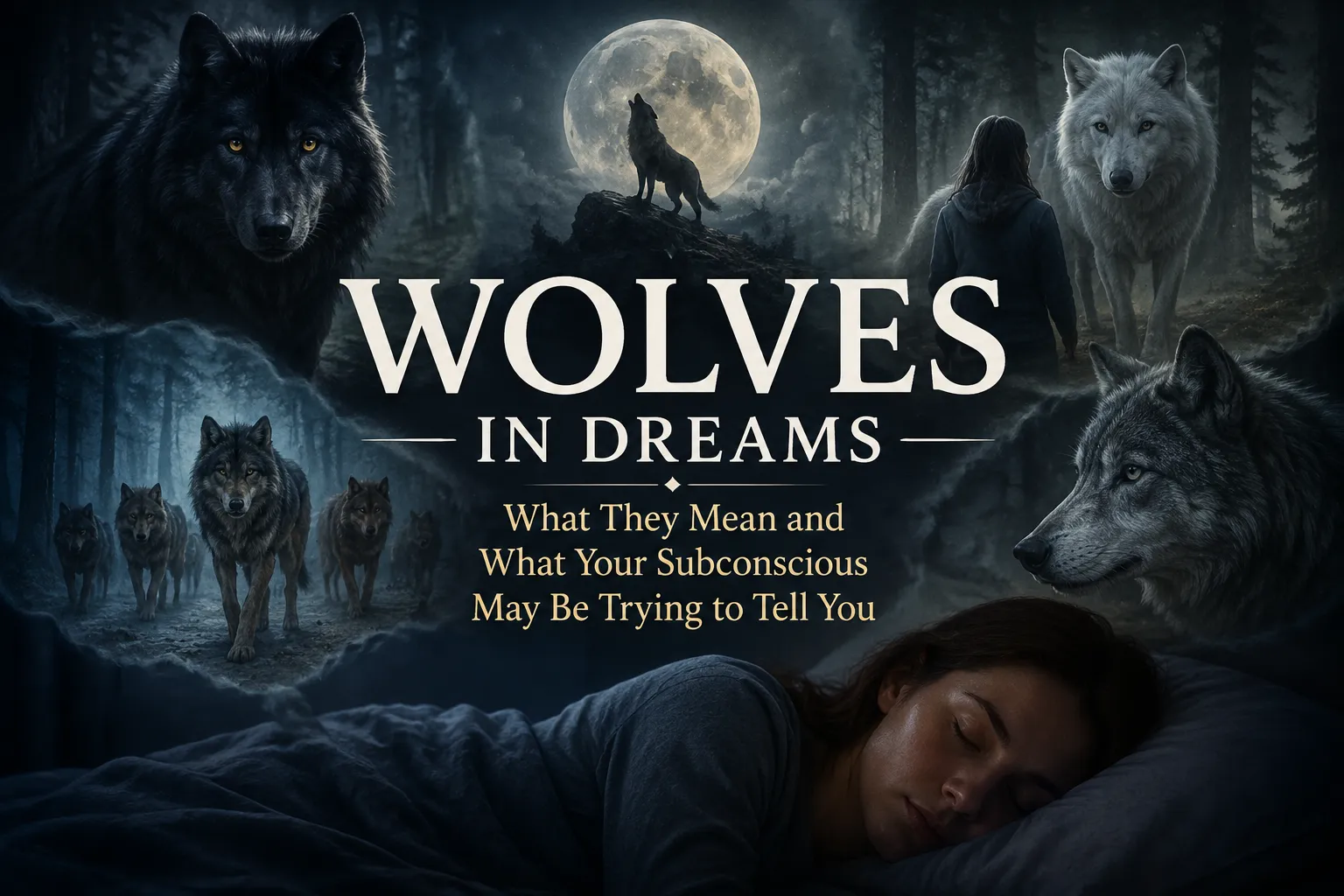
A wolf dream can stay with you because it rarely feels ordinary. The wolf may chase you, watch you from the trees, stand beside you, or appear in a pack. Whatever the scene, the dream often feels charged with instinct, fear, protection, loneliness, or power.
For readers of Kenneth Gray’s Dreams: The Magic of the Night, a dream is not something to dismiss quickly. It can be a meaningful message from the deeper self. A wolf in a dream may be asking you to pay attention to something you already sense but have not fully faced.

Book About Dreams
The Magic of the Night
This book is perfect for anyone seeking to understand the messages and meanings hidden in their dream life. It offers a clear framework for interpreting dreams with real examples and thoughtful insights.
Get the Book- Based on personal dream journals
- Step-by-step interpretations
- Perfect for dream seekers
The Quick Takeaway:
Wolves in dreams often symbolize instinct, fear, protection, freedom, hidden emotions, loyalty, spiritual guidance, or a powerful part of yourself asking to be understood. The meaning depends on what the wolf does, how you feel, and what is happening in your waking life.
Wolves in Dreams Meaning at a Glance
| Dream Detail | Possible Meaning | What to Ask Yourself |
|---|---|---|
| Wolf chasing you | Avoided fear, pressure, guilt, or responsibility | What am I running from emotionally? |
| Friendly wolf | Protection, self-trust, healing, inner guidance | Where am I learning to trust myself? |
| Wolf pack | Family, community, peer pressure, loyalty, belonging | Did I feel supported or threatened? |
| Lone wolf | Independence, isolation, self-reliance, emotional distance | Do I need solitude, or am I withdrawing? |
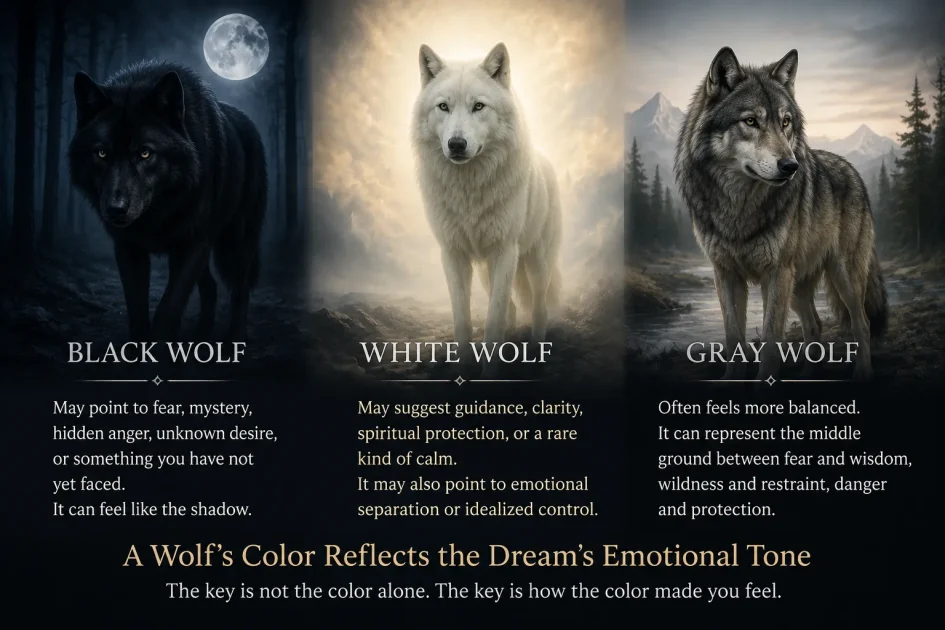
| Black wolf | Shadow self, hidden fear, suppressed anger, unknown strength | What part of myself have I rejected? |
| White wolf | Spiritual guidance, clarity, protection, wisdom | What truth or guidance am I receiving? |
| Wolf inside your house | Private fear, family tension, instinct entering personal life | What issue is too close to home to ignore? |
What Do Wolves in Dreams Usually Mean?
Wolves in dreams often point to instinctive knowledge. A wolf survives by listening, sensing, waiting, and acting at the right time. In dream language, this may reflect your own intuition trying to break through the noise of daily life.
A wolf may also represent fear. For example, if you dream of a wolf growling outside your window, your mind may be showing you a threat that feels close but not yet fully admitted. This could be a strained relationship, a work conflict, or a decision you keep delaying.
The meaning is not always negative. A calm wolf walking beside you may suggest protection, courage, or a growing connection with your inner strength. This is why dream context matters more than a fixed symbol dictionary. You can deepen this approach by studying the basics of dream interpretation.
Why Wolves in Dreams Feel So Powerful
Wolf dreams feel intense because wolves carry both danger and dignity. They can represent the part of you that is alert, loyal, protective, wild, wounded, or ready to act.
In real life, many people silence their instincts. They ignore discomfort, overexplain red flags, or stay polite when their inner life is signaling danger. A wolf dream may appear when your deeper self is trying to interrupt that pattern.
For example, someone who keeps saying “I’m fine” after a betrayal may dream of wolves circling a house. The dream may not predict harm. It may show that the person’s emotional boundaries feel surrounded. To understand this inner process, it helps to explore the role of the subconscious mind.
Spiritual Meaning of Wolves in Dreams
Spiritually, wolves in dreams may represent guidance, awakening, protection, testing, or inner truth. The wolf can appear as a guide through darkness, especially during seasons of confusion or transition.
A friendly wolf may symbolize a guardian presence or a wiser part of the self. If the wolf leads you through a forest, the dream may suggest that you are being guided through uncertainty. The forest matters too, since it often represents the unknown.
A frightening wolf may still carry a spiritual message. It may point to a shadow part of yourself, such as anger, grief, independence, desire, or courage. The dream may be asking you to stop rejecting that part and begin understanding it. If the dream felt unusually vivid, you may also find meaning in vivid dreams and spiritual meaning.
Psychological Meaning of Dreaming About Wolves
Psychologically, wolves in dreams often connect to survival, social pressure, fear, boundaries, and belonging. The mind may use a wolf because the image is strong enough to hold emotional weight.
A wolf chasing you may reflect a responsibility or emotion you keep avoiding. A wolf watching you may suggest that you feel judged, tested, or exposed. A wolf attack may point to emotional conflict, stress, or fear that has grown too large to ignore.
A wolf pack can represent family, coworkers, friends, or community. If the pack protects you, the dream may show your need for support. If the pack hunts you, it may reflect pressure from a group. For related patterns, you can explore other common dreams or leave a comment below to help you interpret your dreams.
Common Wolf Dream Scenarios and What They May Mean
Dreaming of a Lone Wolf
A lone wolf may represent independence, solitude, emotional distance, or self-reliance. If you admire the wolf, the dream may show your desire for freedom. You may need space to think, heal, or make a decision without outside pressure.
If the lone wolf feels sad or threatened, the dream may point to isolation. You may be carrying too much alone. The message may be less about becoming stronger and more about allowing support.
A practical example: someone who recently left a relationship may dream of a lone wolf on a snowy hill. If the dream feels peaceful, it may reflect recovery. If it feels empty, it may reveal loneliness that needs care.
Dreaming of a Wolf Pack
A wolf pack may symbolize family, loyalty, teamwork, protection, or group pressure. The feeling of the dream is the key.
If the pack accepts you, the dream may reflect belonging. If the pack surrounds you, it may point to judgment, workplace pressure, or family tension. Ask whether you felt included, protected, outnumbered, or hunted.
For example, a person preparing for a difficult team meeting may dream of wolves moving together in silence. The dream may be showing the emotional force of the group dynamic.
When Dreaming of Being Chased by Wolves
Being chased by wolves often suggests avoidance. You may be running from fear, grief, guilt, anger, a decision, or a truth you do not want to face.
The dream does not mean disaster is coming. More often, it means something in your inner life wants attention. The chase continues because the issue has not been addressed.
A useful question is: “What follows me in waking life even when I try to ignore it?” That answer is often closer to the dream’s meaning than the wolf itself.
Dreaming of a Friendly Wolf
A friendly wolf often points to self-trust, healing, protection, or inner guidance. This dream can appear when you are becoming more comfortable with your strength.
If the wolf walks beside you, the dream may suggest that your instincts are becoming an ally. If it protects you from danger, it may show that you already have courage you have not fully claimed.
This kind of dream can be especially meaningful for people who usually doubt themselves. The wolf may represent the part of you that knows how to stand firm.
Dreaming of a Black Wolf
A black wolf may symbolize the shadow self, hidden fear, suppressed anger, grief, mystery, or unknown power. This does not mean the wolf is evil.
The black wolf often represents what has been pushed out of awareness. You may have rejected your anger, independence, ambition, or pain because it felt unsafe or unacceptable.
A practical example: someone who avoids confrontation may dream of a black wolf blocking a doorway. The dream may be showing that a suppressed truth must be faced before the person can move forward.
When Dreaming of a White Wolf
A white wolf may represent wisdom, protection, spiritual clarity, or guidance. The color white often adds a feeling of peace, light, or sacred meaning.
If the white wolf comforts you, the dream may reflect inner guidance during a confusing season. If it frightens you, the dream may show that even truth can feel intimidating when you are not ready for it.
This dream is often less about danger and more about attention. Something clear is trying to reach you.
How to Interpret Your Wolf Dream Step by Step
- Write the dream down immediately. Include the setting, wolf color, wolf behavior, people present, and the ending.
- Name your strongest emotion. Fear, calm, awe, sadness, or relief can change the meaning.
- Identify the wolf’s role. Was it a threat, guide, protector, witness, companion, or mirror?
- Connect the dream to waking life. Look for current issues involving fear, boundaries, family, loneliness, freedom, or instinct.
- Ask what the dream wants you to notice. A wolf dream often points to something you already know but have not accepted.
- Track repeated symbols. If wolves keep appearing, use a dream journal to notice patterns. A dream journal template can help you organize the details.
What Most People Misunderstand About Wolves in Dreams
The biggest mistake is assuming every wolf dream is a bad omen. Wolves can represent danger, but they can also show protection, loyalty, courage, and wisdom.
Another mistake is treating online dream meanings as final. A wolf means different things to different dreamers. Someone who fears wolves may read the symbol differently from someone who sees them as sacred or protective.
The third mistake is ignoring your life context. A wolf dream after a family argument may mean something different from a wolf dream after a peaceful retreat. Dreams speak through symbols, but those symbols borrow meaning from your real emotional life.
How Wolf Dreams Can Help You Grow
A wolf dream can help you listen more honestly to yourself. It may show where you need boundaries, courage, rest, protection, or deeper self-trust.
If the dream unsettles you, do not rush to erase it. Ask what it touched. The uncomfortable feeling may be the doorway into the lesson.
Kenneth Gray’s dream-centered work encourages readers to treat dreams as meaningful invitations to self-understanding. You can learn more about the author’s perspective through Kenneth Gray’s author page.
FAQs About Wolves in Dreams
What does it mean if wolves keep appearing in my dreams?
Recurring wolf dreams may mean your subconscious is returning to an unresolved issue. The pattern may involve fear, boundaries, loneliness, family pressure, or spiritual growth. Write each dream down and compare the wolf’s behavior across dreams.
What does it mean if a wolf protects me in a dream?
A protective wolf may symbolize inner strength, spiritual guidance, or a part of yourself that is ready to defend your peace. It can also suggest that you are learning to trust your instincts. Pay attention to what the wolf protects you from.
Is a wolf attack dream a warning?
A wolf attack dream can be a warning, but not always in a literal sense. It may show emotional conflict, stress, betrayal, anger, or fear that feels overwhelming. Look at who or what in your waking life feels unsafe or out of control.
What does it mean to dream of wolves around my house?
A house often represents your private life, family, identity, or emotional safety. Wolves around the house may suggest that fear, instinct, conflict, or protection is close to a personal part of your life. The meaning depends on whether the wolves felt threatening or watchful.
What should I do after a vivid wolf dream?
Write it down, name the strongest emotion, and connect the dream to your current life. Do not force a meaning too quickly. If the dream repeats or feels spiritually significant, reflect on it over several days and compare it with other dreams.
