

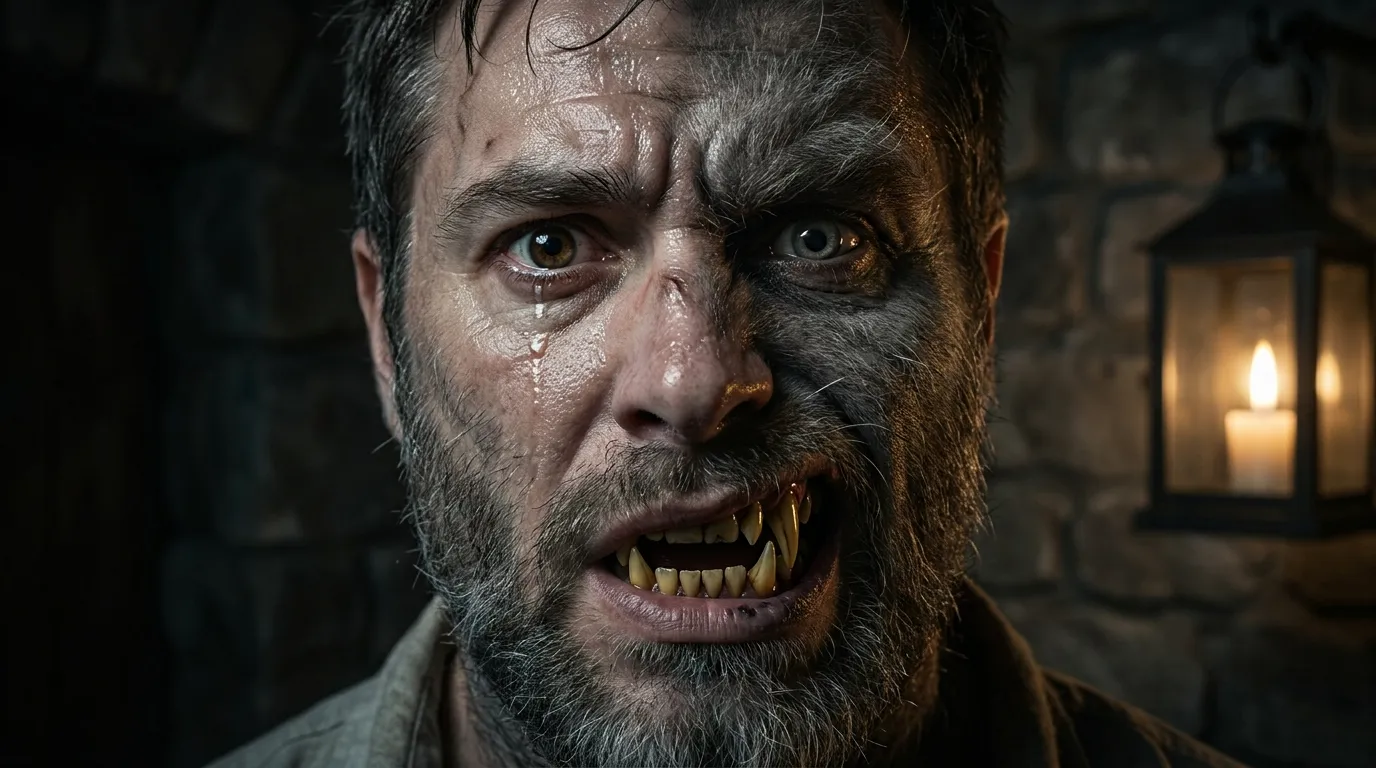
You wake with a start, heart hammering against your ribs, the phantom sensation of fur and claws still lingering in your mind. A dream of a werewolf is rarely a passive experience; it is a visceral encounter with the raw, untamed corners of your own psyche. These dreams often leave us feeling exposed, questioning the very nature of our control over our own lives and impulses. We fear the beast within, yet we must ask ourselves what that beast is actually trying to tell us.
The Quick Takeaway: A werewolf dream meaning typically signifies a struggle with repressed instincts, anger, or a “shadow” aspect of your personality that is demanding recognition. It serves as a urgent signal that you are either fighting a necessary transformation or fearing the loss of control over your primal nature.

Book About Dreams
This book is perfect for anyone seeking to understand the messages and meanings hidden in their dream life. It offers a clear framework for interpreting dreams with real examples and thoughtful insights.
Get the Book- Based on personal dream journals
- Step-by-step interpretations
- Perfect for dream seekers
The Core Comparison Matrix: Decoding the Werewolf Archetype
Interpreting this symbol requires nuance, as the context changes everything. A werewolf attacking you carries a different message than one you become. Use the matrix below to quickly identify the specific angle of your dream.
| Dream Scenario | Core Symbolism | Psychological Implication | Spiritual Warning |
|---|---|---|---|
| Being Chased | Avoidance of instincts | You are running from a truth about yourself that refuses to be ignored. | A sign that suppression is no longer viable; the “hound of heaven” aspect. |
| Becoming the Wolf | Integration of the Shadow | Represents a (possibly violent) release of pent-up emotion or creative energy. | The danger of losing one’s moral center to base desires or rage. |
| Fighting a Werewolf | Internal Conflict | A conscious battle between your civilized self and your impulsive nature. | Spiritual warfare: a struggle against a habit or influence that feels “demonic.” |
| A Friendly Wolf | Acceptance | You are beginning to harness your personal power healthily. | The taming of the beast; finding peace with your dual nature. |
The Shadow Self and the Beast Within
Carl Jung, a pioneer in understanding the deeper layers of the mind, spoke often of the “Shadow”—the unconscious part of our personality that the conscious ego does not identify with. In many ways, the werewolf is the ultimate cinematic representation of the Shadow archetype. It is the part of us that is hairy, wild, and socially unacceptable, yet it remains fundamentally human underneath the fur.
When this creature appears in your dreams, it is often a signal that you have repressed a vital part of your own nature for too long. Perhaps you have been overly polite in a situation that required righteous anger, or you have stifled your own sexual or creative energies to fit a specific social mold. The transformation in the dream is not random; it illustrates the pressure building up inside you.
Consider the person who works a rigid corporate job but feels a deep, unspoken calling to create art or live wildly. They may dream of a werewolf bursting through their office walls. This is not a prophecy of doom. It is a diagnostic tool. The dream is showing you that your “civilized” persona is cracking under the weight of the unlived life. The energy must go somewhere, and if not channeled consciously, it will erupt as the ravenous beast.
This symbol forces us to confront what we deem “uncivilized” about ourselves. We like to think we are in total control, masters of our destiny. The werewolf mocks that pretension. It reveals the animal beneath the suit, reminding us that we are biological creatures with drives and needs that cannot be reasoned away with logic alone.
Biblical Meanings and Spiritual Warfare
From a spiritual perspective, the werewolf sits in a complex position. While the specific term “werewolf” is not in scripture, the Bible is replete with references to wolves as dangerous, ravenous predators. Jesus warned his followers to beware of false prophets who come in sheep’s clothing but inwardly are ravenous wolves. This paints the image of the werewolf as a deceiver or a hidden threat, perhaps even a sign of spiritual attack in dreams.
However, dream interpretation is rarely as black and white as “good versus evil.” If you dream of transforming into a beast, it may symbolize a moral struggle you are currently facing. Are you “losing your humanity” in a specific situation? Have you compromised your values to the point where you no longer recognize yourself? The biblical narrative often contrasts the “new man” in Christ with the “old man” of sin. The werewolf could represent the old, carnal nature attempting to reassert dominance over your spiritual life.
For a deeper understanding of canine symbolism in scripture, it is helpful to compare this to the wolves in dreams’ interpretation. While a standard wolf might represent a pack mentality or an external threat, the werewolf is intensely personal. It is you (or a human) becoming the threat. This transformation aspect is key. It mirrors the warning in scripture about giving a foothold to darker impulses. If you feel the dream carries a heavy, oppressive weight, it might be time to examine your spiritual defenses and the influences you allow into your life.
Loss of Control and the Fear of Transformation
One of the most terrifying aspects of the werewolf mythos is the involuntary nature of the transformation. The change is forced upon the victim by the full moon, stripping them of agency. In the language of dreams, this almost always points to a fear of losing control in your waking life.
You might be facing a situation where you feel circumstances are forcing your hand. Maybe a health crisis, a financial downturn, or a relationship breakdown is making you feel like a passive observer in your own life. The werewolf dream acts out this helplessness in a safe, symbolic space. It allows you to experience the chaos of transformation without the real-world consequences, but the feeling lingers.
I recall a period in my own life where I was suppressing intense grief. I refused to cry or acknowledge the loss, determined to “stay strong.” During this time, I had recurring dreams of a beast scratching at the doors of my house, trying to get in. The interpretation was clear: I was trying to lock out a natural emotional process. Grief is wild and untamed; trying to control it turns it into a monster. Once I allowed myself to feel the pain, the beast stopped pounding on the door.
Transformation is inherently violent. It is the death of one state and the birth of another. We often want growth to be a smooth, linear progression, but real change often feels like being ripped apart. The werewolf dream acknowledges this violent potential. It asks if you are fighting a change that is actually necessary for your survival, or if you are dangerously close to snapping under the pressure of pretense. If you are interested in other symbols of radical change or danger, the biblical meaning of the dragon in dreams offers a parallel look at powerful, transformative beasts.
Distinguishing Psychological Projection from External Threat
A critical step in analyzing this dream is determining who the werewolf is. Is it you, or is it someone else?
If you are the observer, watching a werewolf terrorize the landscape, you may be projecting your own “unacceptable” qualities onto others. We often judge in others what we refuse to see in ourselves. Do you have a boss or partner who seems irrational and volatile? Your dream might be painting them as a werewolf to validate your fear of their temper. However, look deeper. Are you secretly jealous of their ability to throw their weight around? Do you wish you had the “teeth” to defend yourself as aggressively as they do?
Conversely, if the werewolf is an unknown attacker, it often represents a faceless anxiety. This is common for those who suffer from dreams about monsters trying to kill them. The monster is a generic placeholder for generalized fear. The werewolf specifics—the fur, the teeth, the human eyes—add the flavor of “betrayal by the human.” It suggests that the threat is not alien, but something closer to home. It is a perversion of the familiar.
This distinction changes the remedy. If the wolf is you, the work is internal integration and acceptance. If the wolf is an external figure, the work involves setting boundaries and recognizing the “animal” nature in those around you so you are not blindsided by their behavior. In either case, the dream strips away the veneer of civilization to reveal the dynamic at play.
How to Analyze Your Werewolf Dream: A Practical Guide
To move from a generic definition to a life-changing insight, you must act as the final authority on your own subconscious. The best interpreter of a dream is the dreamer. Use the following steps to unlock the specific message your mind is sending.
- Identify the Trigger. Look at the 24 to 48 hours preceding the dream. Did you hold your tongue when you wanted to scream? Did you witness someone else losing control? The dream is often a direct response to yesterday’s suppressed events.
- Chart the Emotion. Isolate the dominant feeling in the dream. Was it fear, exhilaration, or power? If you felt powerful as a werewolf, you may be ready to embrace a more assertive version of yourself. If you felt terrified, you are resisting a necessary change.
- Locate the “Fur”. Where in your life are you wearing a “costume” or hiding your true self? The werewolf tears off human clothes. What mask are you afraid will be ripped away? This often relates to social standing or professional image.
- Assess the Violence. Was violence done to you or by you? This determines whether you are a victim of circumstance or an agent of your own destruction. If you were biting or attacking, ask what situation in waking life you want to “tear apart.”
- Seek the Integration. Do not just try to banish the wolf. Ask what it needs. Does it need to run? Does it need to be heard? Giving the shadow a controlled outlet—like intense exercise, creative writing, or honest conversation—often dissolves the nightmare.
When to Seek Deeper Insight
While most werewolf dreams are symbolic reflections of internal stress, they can sometimes point to deeper psychological distress or spiritual oppression. If these dreams are recurring and accompanied by sleep paralysis or a sense of overwhelming dread that bleeds into your waking hours, it may be time to seek professional or spiritual counsel.
We often underestimate the power of the subconscious to act as a pressure valve. Ignoring the wolf will not make it go away; it will only make it hungrier. Engaging with the symbol through dream interpretation turns a terrifying nightmare into a valuable asset for personal growth. The goal is not to kill the wolf, but to tame it and reclaim the strength it represents.
Frequently Asked Questions
What does it mean if I dream of a werewolf protecting me?
This suggests that your “shadow” side is not your enemy, but a guardian. You may be accessing a primal, protective strength that your polite, civilized self cannot muster. It implies that you need to get a little “scrappy” or fierce to protect what is yours.
Is a werewolf dream a bad omen?
It is rarely a literal prediction of future events. Instead, it is an omen regarding your internal state. It warns that your current path of repression or control is unsustainable. View it as a helpful red flag from your psyche rather than a curse.
Why do I feel pain when transforming into a werewolf in the dream?
Pain in dreams often signifies the pain of change. It highlights that growth is not easy. You are fighting the transformation, or the shift in your life/identity, that is happening forcefully, against your ego’s resistance.
Does a werewolf dream mean I have anger issues?
It is a strong possibility. The werewolf is a classic symbol of uncontrolled rage. It usually indicates that you have anger simmering beneath the surface that you have not acknowledged or expressed healthily.
What is the difference between dreaming of a wolf and a werewolf?
A standard wolf usually represents instinct, survival, or social hierarchy (pack mentality). A werewolf adds the element of duality—the human element. It specifically points to a conflict between your human/conscious self and your animal/instinctual self. The werewolf is about the struggle of identity, whereas the wolf is often about the nature of identity.
